Introduction
Whether you are a paper cup manufacturer expanding your production lines or a packaging distributor looking to understand the materials that go into your products, a deep knowledge of cupstock paper — the base material used to produce paper cups — is essential. The quality of your finished paper cups depends almost entirely on the quality of the raw material: the wrong cupstock grade can lead to leaks, poor print quality, machine downtime, and customer complaints.
China is the world's dominant producer of cupstock paper, supplying mills and converters globally. This guide provides a comprehensive overview of the key cupstock paper categories, material properties, coating types, certifications, and practical sourcing advice for buyers in 2026.
1. What Is Cupstock Paper?
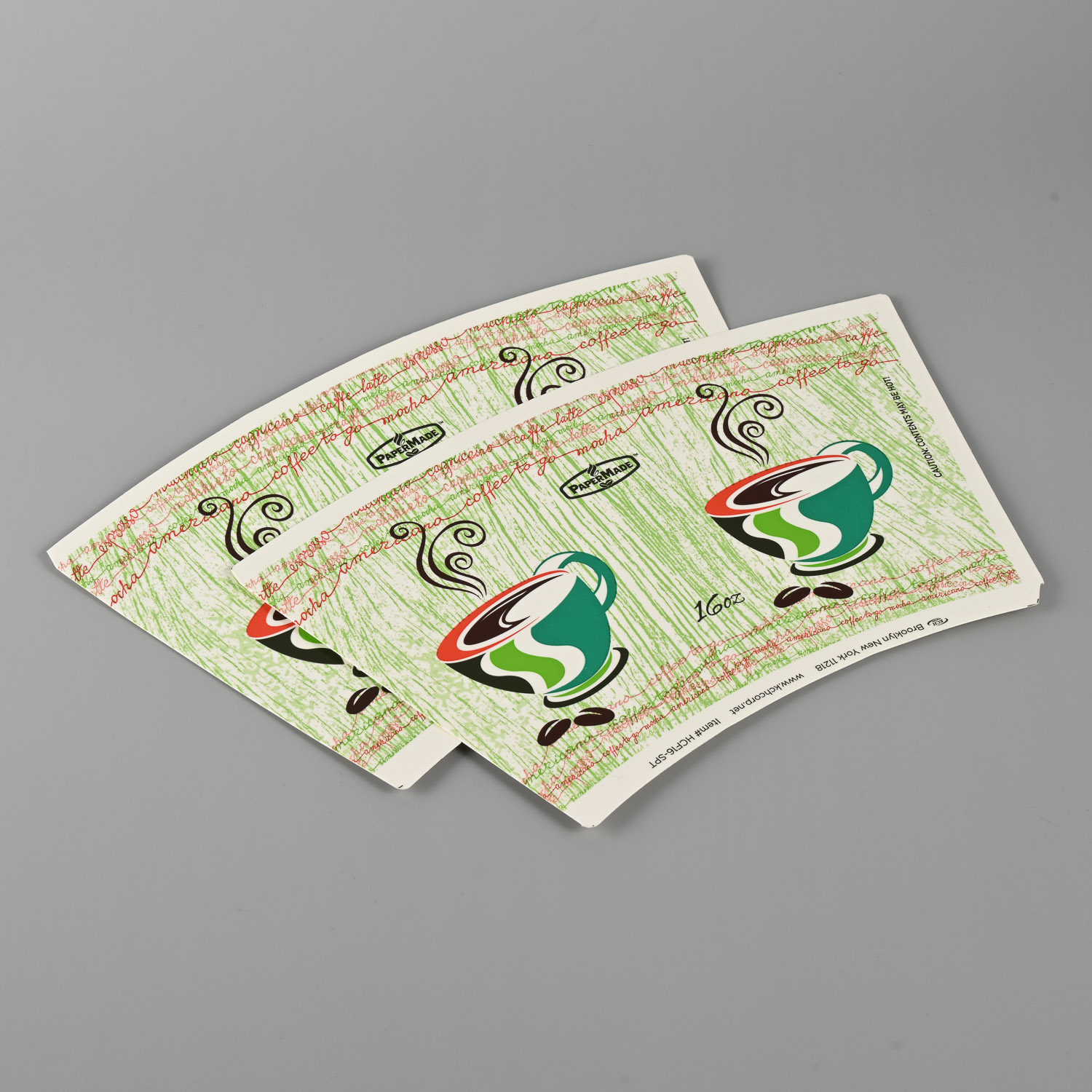
Cupstock paper is a specialized paperboard engineered specifically for the production of paper cups. It is distinct from standard paperboard in several key ways:
- Food-grade fiber: Cupstock is manufactured using virgin pulp that meets strict food contact safety standards. Recycled fiber is generally not permitted for direct food contact paper cups.
- Barrier coating: Most cupstock is coated on one side with a barrier layer — typically polyethylene (PE) or polylactic acid (PLA) — that prevents liquid penetration and maintains cup integrity.
- Precision roll dimensions: Cupstock is typically supplied in large rolls with tightly controlled width tolerances (+/- 0.5mm) and uniform tension to feed through high-speed cup forming machines without jamming or tearing.
- Optimal stiffness-drape balance: Cupstock must be stiff enough to hold its shape when filled with liquid, yet flexible enough to form clean side seams without cracking.
2. Types of Cupstock Paper by Base Material
Virgin Bleached Kraft Paperboard
The most commonly used base material for cupstock. Made from virgin bleached wood pulp (softwood/hardwood blend), it offers high brightness for vibrant print reproduction, excellent tensile strength for high-speed cup forming, consistent surface smoothness for leak-free side seams, and reliable die-cutting for precise bottom disc insertion. Typical GSM: 170–280 gsm. This is the material used for most standard single-wall and double-wall paper cups in the market.
Virgin Unbleached Kraft Paperboard
Also known as "natural kraft" cupstock. It has a natural brown color and is made from unbleached virgin fiber. This material is trending rapidly in markets where eco-friendly, natural aesthetics are valued. It has slightly lower brightness but higher tear strength compared to bleached grades. It is commonly used for kraft-style paper cups and rustic food packaging. Some suppliers offer "natural white" cupstock that is lightly bleached to a cream shade.
Folding Boxboard (FBB) / Solid Bleached Board (SBB)
Used for thicker, premium cup constructions. SBB is a high-density board with superior stiffness. It is often used for double-wall cups, ripple wall cups, and ice cream cups that require extra structural integrity. GSM range: 220–350 gsm.
3. Coating Systems: PE, PLA, and Beyond
The coating layer is what makes a paper cup liquid-proof. Here are the main options:
Polyethylene (PE) Coating
The industry standard for decades. PE is a thermoplastic polymer applied as a thin film (typically 15–25 microns) on the interior surface of the cup stock. Key properties: excellent water barrier, wide operating temperature (suitable for both hot and cold beverages), good heat-sealing performance for cup side seams, cost-effective — the most economical coating option, and recyclable in specialized PE-recovery streams. PE-coated cupstock accounts for approximately 80% of the global paper cup market. For cold drink cups, the coating thickness is typically 15–18 microns; for hot drinks, 20–25 microns. PE coated paper has a standard GSM of 190–280 gsm.
Polylactic Acid (PLA) Coating
PLA is a bioplastic derived from plant starch (typically corn or sugarcane). It is compostable in industrial facilities and is the leading "eco-friendly" alternative to PE. Key properties: compostable in industrial facilities (certified to EN 13432 or ASTM D6400), plant-based renewable source, similar water barrier properties to PE for cold and warm beverages (up to 50°C), higher cost — typically 20–40% more expensive than PE, and more challenging heat-sealing performance requiring optimized machine settings. PLA-coated cupstock is preferred by environmentally conscious brands and is mandatory in certain European markets with single-use plastic restrictions. Note that PLA coating is NOT suitable for very hot beverages (above 60°C).
Water-Based Dispersion Coating
An emerging technology that applies an aqueous barrier coating without using plastic polymers. These coatings are typically acrylic-based or styrene-acrylic-based and are free from intentionally added PFAS. Key properties: plastic-free and PFAS-free formulation, recyclable in standard paper streams (repulpable), suitable for both hot and cold beverages up to 85°C, currently more expensive than PE but comparable to PLA. Water-based dispersion coatings are gaining traction in the European market where PFAS regulations are tightening. However, the technology is still maturing and not yet available from all cupstock suppliers.
Double-Sided Coating
For certain specialty cup types (dual-purpose hot/cold cups, ice cream cups), cupstock may be coated on both sides. The exterior coating provides moisture resistance against condensation, while the interior coating holds the beverage. Double-coated cupstock is heavier and more expensive but offers superior performance in demanding conditions.
4. Key Technical Specifications for Cupstock Buyers
When ordering cupstock from a Chinese supplier, specify the following parameters clearly:
- GSM (grams per square meter): The most fundamental specification. Verify the GSM including the coating layer. Most cupstock ranges from 170 to 300 gsm.
- Roll width (mm): Must match your cup forming machine's specification. Common widths include 435mm (for 4oz cups), 520mm (8oz), and 620mm (12oz/16oz). Tolerances should be within +/- 0.5mm.
- Roll outer diameter (OD) and core inner diameter (ID): Standard ID is 76mm (3 inches) or 152mm (6 inches). OD typically ranges from 1000mm to 1500mm depending on GSM and roll length.
- Coating weight (gsm): PE coating adds approximately 15–25 gsm per side. PLA coating adds 18–30 gsm. Make sure this is factored into the total GSM.
- Moisture content (%): Cupstock should have a moisture content of 6–8%. Deviation affects forming performance and may cause curling or tearing.
- Brightness (ISO %): For printed cups, brightness of 80–90% ISO is standard. Higher brightness yields more vivid print colors.
- Smoothness (Bekk seconds): Affects side seam leak-proofing. Minimum 60-90 Bekk seconds is recommended for consistent cup forming.
5. Certifications and Compliance for Cupstock
Every country has its own regulatory framework for food contact paper. Here are the essential certifications for cupstock:
- FDA 21 CFR 176.170: U.S. FDA regulation for paper in contact with aqueous and fatty foods. This is the baseline standard for cupstock entering the US market.
- EU Regulation 1935/2004 and 10/2011: The EU framework for food contact materials plus the specific plastic implementation measure. PLA coated cupstock must also comply with EU 10/2011.
- GB 4806.8-2016 (China): The Chinese national standard for food contact paper and board. Reputable Chinese cupstock manufacturers will be certified to this standard.
- FSC Chain of Custody: Many global brands now require FSC-certified fiber for their cupstock. Verify your supplier's FSC CoC certificate number and scope.
- PFAS-Free Declaration: With PFAS (per- and polyfluoroalkyl substances) under increasing regulatory scrutiny, request a PFAS-free declaration from your cupstock supplier. Many European importers now require it as standard.
- Migration test reports: Request migration test results (overall migration and specific migration) from an accredited third-party laboratory. Valid reports should be no older than 12 months.
6. Cupstock Sourcing from China: What to Know
China produces millions of tons of cupstock annually, with major production centers in Shandong, Zhejiang, Jiangsu, and Fujian provinces. Here are practical tips for cupstock buyers:
- Minimum order quantities (MOQ): Most mills require an MOQ of 5–10 metric tons per specification (GSM + roll width + coating type). Smaller quantities may be available from trading companies at a premium.
- Lead times: Standard production lead time is 15–25 working days. Custom specifications (special roll widths, custom coating) may require 25–40 working days including sampling.
- Sampling: Always request a sample roll (1–2 meters wide) for trial on your cup forming machine. Visual inspection alone is not sufficient — you must confirm real-world performance on your specific equipment.
- Price trends 2026: As of mid-2026, bleached virgin cupstock (PE coated, 190–250 gsm) is priced in the range of USD $1,200–$1,600 per metric ton FOB China, depending on GSM and coating type. PLA-coated cupstock commands a 20–40% premium. Prices are subject to pulp market fluctuations.
- Shipping: Cupstock rolls are typically shipped in 20-foot containers (20–22 metric tons per container). Ensure the rolls are properly wrapped with moisture barrier and edge protection for sea freight.
7. Common Cupstock Defects and Prevention
Understanding common defects helps you set quality standards with your supplier:
- Wavy edges: Caused by uneven moisture profile across the roll width. Results in poor cup forming and seam misalignment.
- Coating pinholes: Tiny gaps in the PE/PLA layer that cause cup leakage. Supplier should perform in-line pinhole detection.
- Coating delamination: The coating layer separates from the base paper during cup forming. Usually indicates poor coating adhesion or contaminated base paper surface.
- Roll telescoping: The roll layers shift sideways during winding or transit, causing an uneven roll edge. This leads to feeding issues on cup machines.
- Doctor line marks: Visible longitudinal lines on the coating surface. Indicates coating blade wear. Affects print quality and side seam integrity.
Conclusion
Cupstock is the foundation of every paper cup, and choosing the right grade — base material, coating system, GSM, and certification — directly impacts your product quality and market success. Whether you need standard PE-coated cupstock for hot beverage cups, PLA-coated for compostable cups, or natural kraft for the eco-aesthetic market, working with an experienced Chinese supplier ensures consistent quality and competitive pricing.
At Ningbo Salon Paper Product Co., Ltd., we supply a full range of cupstock paper: PE-coated, PLA-coated, and food-grade base paper, with GSM from 170 to 300 gsm and custom roll widths. All our materials meet FDA and EU food contact standards, and FSC-certified options are available. We invite cup manufacturers and distributors to request samples for machine trials.
Looking for Cupstock Paper?
Visit www.salonpaper.com for free samples and competitive pricing. Our team will help you select the right cupstock for your production needs.
Contact Us for Samples View Raw Materials